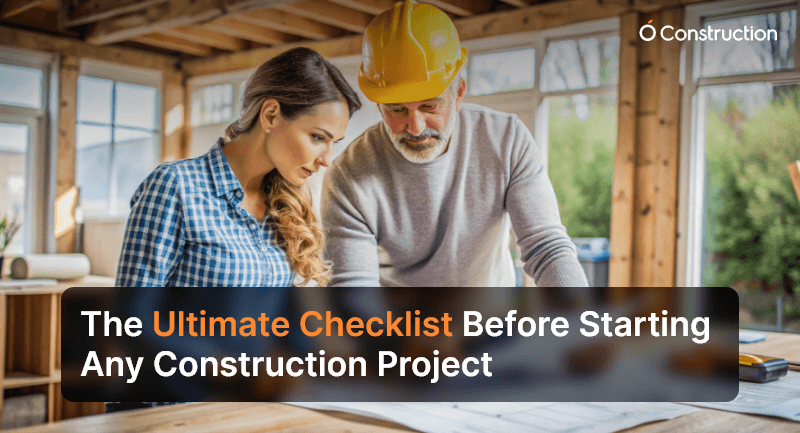

Starting a construction project is thrilling — but without a clear construction project checklist, it can quickly turn chaotic. Before the foundation is poured, every plan, permit, and precaution must be in place. A well-designed checklist ensures that your project stays on budget, meets deadlines, and complies with all relevant regulations.
Let’s explore the ultimate pre-construction checklist you should complete before starting any construction project.
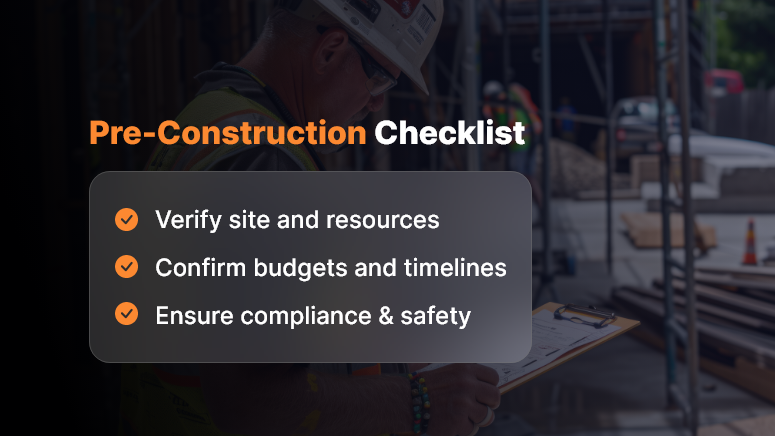
1. Pre-Planning and Feasibility
Good preparation builds great projects.
- Define project objectives: Clarify if the goal is residential, commercial, or industrial.
- Conduct feasibility studies: to assess the technical, environmental, and financial aspects.
- Set budget and funding: Confirm total costs, cash flow, and backup financing.
- Identify stakeholders: Include investors, contractors, engineers, and government bodies.
- Survey the site: Perform soil tests, topographic mapping, and geotechnical investigations.
Strong feasibility planning ensures the entire construction project checklist starts on solid ground.
2. Legal and Regulatory Compliance
Ignoring compliance can halt progress instantly.
- Verify land ownership: Ensure titles and deeds are authentic and dispute-free.
- Obtain building permits: Get all local, zoning, and environmental clearances.
- Follow municipal codes: Meet fire safety, labor, and pollution standards.
- Secure insurance: Include liability, builder’s risk, and workers compensation.
This section of your pre-construction checklist guarantees legality and accountability.
3. Design and Engineering
Design is the bridge between planning and execution.
- Finalize architectural design: Align with the client’s vision and local regulations.
- Validate structural safety: Review wind load, seismic resistance, and material standards.
- Coordinate MEP systems: Integrate mechanical, electrical, and plumbing seamlessly.
- Embrace sustainability: Add green materials and energy-efficient layouts.
- Conduct value engineering: Balance quality with cost-effectiveness.
With this, your construction planning checklist becomes both smart and sustainable.
4. Contracts and Procurement
Before construction starts, lock in the essentials.
- Choose qualified contractors: Review licenses, portfolios, and references.
- Define the scope of work: Avoid vague deliverables and cost disputes.
- Run fair bidding processes: Maintain transparency in selection.
- Plan procurement: Identify long-lead items and verify supplier reliability.
- Fix payment schedules: Link payments to milestones and inspections.
Transparent contracts keep your construction checklist legally and financially secure.
5. Project Management and Scheduling
Timing is everything in construction.
- Create a Work Breakdown Structure (WBS): Divide work into manageable sections.
- Build a Gantt chart: Track progress visually across timelines.
- Apply the Critical Path Method (CPM): Focus on activities affecting delivery time.
- Allocate resources smartly: Assign the workforce and machinery efficiently.
- Plan risk management: Prepare for weather delays or material shortages.
A well-planned schedule transforms your construction project checklist into a live project control tool.
6. Health, Safety, and Environment (HSE)
Safety ensures productivity.
- Develop a site safety plan: Include PPE usage, emergency drills, and audits.
- Identify hazards: Assess risks from excavation, heights, or chemicals.
- Manage waste effectively: Segregate and recycle construction debris.
- Protect the environment: Control noise, dust, and runoff.
- Train all workers: Provide first-aid, fire safety, and machinery handling sessions.
A complete construction safety checklist reduces incidents and improves team morale.
7. Technology and Documentation
Digitization drives modern construction success.
- Use digital project tools: Manage approvals, drawings, and reports online.
- Implement paperless workflows: Store all files securely in the cloud.
- Adopt BIM (Building Information Modeling): Detect design clashes early.
- Set communication protocols: Ensure transparent reporting and follow-ups.
- Centralize document control: Store contracts, permits, and inspection records efficiently.
This step ensures your construction documentation checklist stays organized and audit-ready.
8. Financial Controls
Financial discipline keeps projects healthy.
- Prepare detailed cost plans: Include labor, materials, and overheads.
- Forecast cash flow: Align payment cycles with project stages.
- Ensure tax compliance: Review GST, VAT, and statutory rules.
- Maintain contingency reserves: Allocate at least 5–10% for emergencies.
- Conduct monthly audits: Track financial performance consistently.
Strong financial management fortifies your construction project checklist from the ground up.
9. Stakeholder Communication
Collaboration drives clarity.
- Host a kickoff meeting: Align everyone on scope, schedule, and deliverables.
- Define accountability: Assign clear roles to each stakeholder.
- Maintain reporting cadence: Provide weekly and monthly progress updates.
- Set dispute resolution systems: Define mediation or arbitration processes.
- Encourage transparency: Keep communication open and factual.
Effective communication ensures your construction project planning checklist remains collaborative and efficient.
10. Final Pre-Construction Checklist
Before breaking ground, review everything once more:
- All approvals and permits are in place
- Budget and contingencies are verified
- Contracts are signed and sealed
- Site is cleared and secure
- HSE plans are ready and trained
- Stakeholders approved all designs
You’re now ready to begin your project with confidence and compliance.
Conclusion
Every great structure starts with an even greater plan. A thorough construction project checklist ensures your project remains compliant, efficient, and safe.
By following this guide, you’ll minimize risk, maximize productivity, and deliver successful outcomes — from the first blueprint to final handover.
Frequently Asked Questions (FAQs)
1. What is a Construction Project Checklist?
A construction project checklist is a structured document that outlines all essential steps, approvals, and verifications needed before starting construction. It ensures compliance, safety, and readiness.
2. Why is a Pre-Construction Checklist Important?
It prevents costly mistakes by ensuring you’ve addressed every aspect — from land approvals to contractor selection and safety compliance — before the project begins.
3. What Should Be Included in a Construction Checklist?
Key items include site verification, budgeting, permits, design approvals, contracts, safety measures, and financial controls.
4. How Do You Prepare a Construction Project Checklist?
Start by listing all stages — planning, legal, design, safety, and procurement — and assign responsible teams for each. Review it regularly before execution.
5. How Does a Checklist Help in Project Management?
It streamlines communication, tracks progress, and ensures accountability across teams, reducing delays and rework.
6. Who Uses a Construction Project Checklist?
Project managers, contractors, engineers, architects, and site supervisors rely on it to align work and maintain compliance.
7. How Can Technology Simplify Construction Planning?
Digital project management tools centralize tasks, automate documentation, and track progress in real time, ensuring transparency and accuracy.
8. How Do I Ensure Legal Compliance Before Construction?
Verify land titles, acquire all permits, and comply with fire, environmental, and labor laws as part of your pre-construction checklist.
9. What Are Common Risks in Pre-Construction Planning?
Inadequate feasibility studies, missing permits, and poor budgeting are major risks that can delay projects or increase costs.
10. Can Small Construction Firms Use This Checklist?
Absolutely. Whether small or large, every firm benefits from a detailed construction project checklist that ensures control, compliance, and confidence.